Scenic Construction and Production
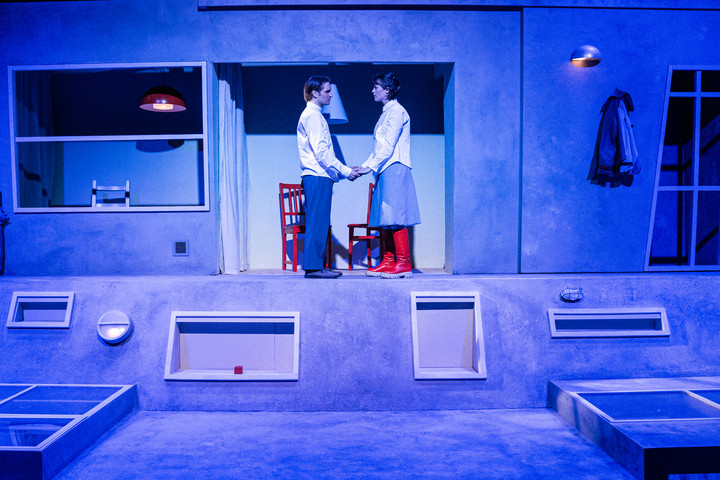
In collaborative productions at the Danish National School of Performing Arts, the master carpenter holds the overall responsibility for constructing and producing the scenographic elements of a performance so that they both convey the artistic vision to the audience and function practically in terms of stage technology and safety.
The master carpenter’s most important tools are a deep understanding of the stage and its technical possibilities, as well as a practical and aesthetic understanding of how scenography is built and handled.
As a master carpenter, you work closely with the scenographer, production manager, props maker, lighting designer, sound designer, stage manager, and others.
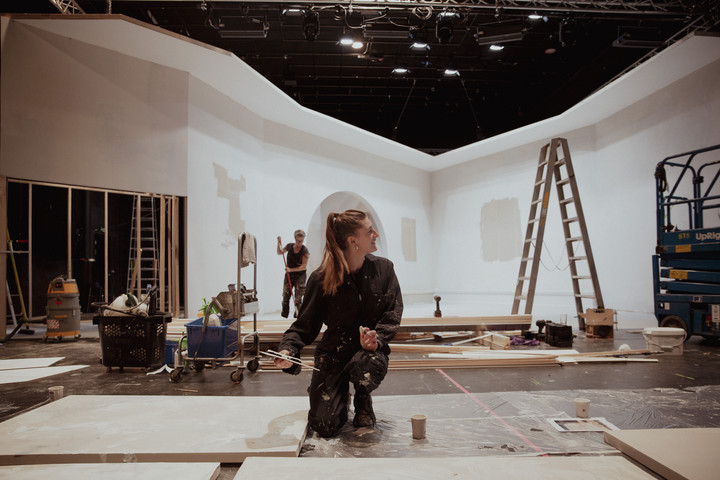
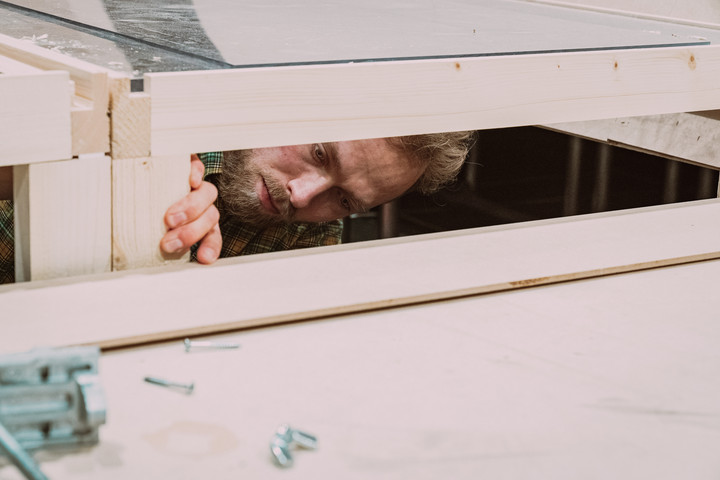
In the programme, you learn to build, surface-treat, and handle scenographic elements.
You must enjoy working with your hands and be comfortable expressing yourself visually. You should have basic construction skills and the ability to think creatively and in a solution-oriented manner. In addition, you should be curious about interdisciplinary collaboration in artistic development processes and about your own role within them, as well as open to exploring planning.
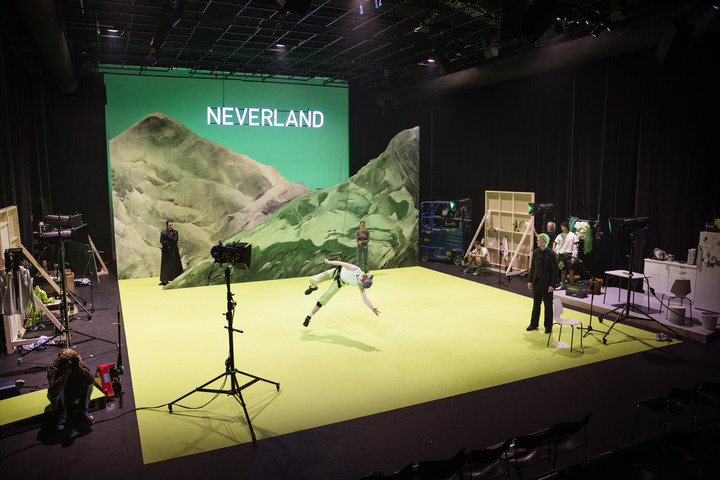
Teaching alternates between practice-based instruction, theoretical method training, and project work. You acquire new practical skills, learn to reflect on your own practice, and use analytical methods as the basis for your work. Throughout the programme, your skills and knowledge are brought into play through collaborations with students from other programmes — including exercises, smaller projects, and larger productions.
The programme in stage construction and production is within the field of performing arts production. Read more about the field here.



Employment
Graduates of the stage construction and production programme are typically employed to work with the construction and production of scenographic elements. Most graduates work in theatres or in related areas of the cultural sector. Many work as freelancers on specific productions or projects, but there are also opportunities for permanent positions, especially at larger theatres.
Admission
Students are admitted once a year. Note that the application deadline typically falls already in December of the year before the programme begins. All students are admitted based on an entrance exam, where a selection committee evaluates applicants according to a number of criteria.
Read more in the application guide.


